
bankaustria-kunstforum.at - You are on page "Review | Bank Austria Kunstforum"
Use following links for navigation.
Choose language
Search
BIRGIT JÜRGENSSEN
RETROSPECTIVE
16 December 2010 - 6 March 2011
In the winter of 2010/11, the Bank Austria Kunstforum and the Sammlung Verbund will jointly present the first posthumous retrospective of the work of Birgit Jürgenssen (1949-2003). The Vienna-born artist is regarded as one of the internationally outstanding representatives of the feminist avant-garde. Basing her work on the emancipatory potential of Surrealism and inspiration by Freudian psychoanalysis in dialogue with the social-critical discourse of her generation, since the late 1960s she developed a complex and stylistically multifaceted art.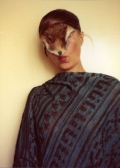
FRIDA KAHLO
RETROSPECTIVE
1 September – 5 December 2010
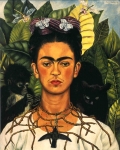
In autumn 2010, the Bank Austria Kunstforum is presenting the first ever comprehensive Frida Kahlo retrospective in Austria. The myth surrounding the Mexican artist has taken on global format; Frida is an icon with star character: an identification figure of Mexican culture, forerunner of the feminist movement, a brand promoted in a mega-merchandising machine, glitteringly exotic film subject for the Hollywood cinema.
AUGENSCHMAUS / A FEAST FOR THE EYES
FOOD IN STILL LIFE
10 February – 30 May 2010
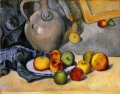 ©Paul Cézanne, Pichet de grès (Steingutkrug), 1893
© Fondation Beyeler, Riehen/Basel
From February 2010 The Bank Austria Kunstforum will show a »culinary« exhibition that will focus its attention on the age-old and ever-changing everyday culture of eating and drinking – a theme which receives its most extensive treatment in the – so to speak – »marginal« genre of still life.
PastPresentFuture
WORKS FROM THE UNICREDIT GROUP COLLECTION
16 October 2009 - 10 January 2010
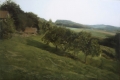 ©Gerhard Richter, Wiese, 1983
© Sammlung HypoVereinsbank - Member of UniCredit Group
UniCredit Group’s strong cultural commitment aims to contribute to an open and tolerant cultural environment which benefits from Europe’s regional diversity and forms the basis of a cross-border cultural network.
The UniCredit Group Collection, which contains over 60,000 works of art, is at the core of the bank’s cultural commitment. It includes works by old masters like Canaletto and Tintoretto, modern classics like Yves Klein, Fernand Léger, Girogio Morandi, Kurt Schwitters and Oskar Kokoschka as well as leading contemporary artists like Andreas Gursky, Christo, Georg Baselitz and Gerhard Richter. The collection also includes 4,000 historical and contemporary photographic works. Local collections in Central and Eastern Europe focus on contemporary art in the various countries and are steadily growing.
»PastPresentFuture« is the title of an exhibition at the Bank Austria Kunstforum presenting a selection of works which form part of the UniCredit Group Collection and were created in different epochs and in different countries. The first presentation of the UniCredit Group Collection thus covers several significant periods in the history of European art.
GUGGING.!
IN VIENNA
27 May - 28 June 2009
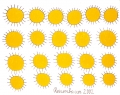 ©Heinrich Reisenbauer, Sonnen, 2002
© Privatstiftung - Künstler aus Gugging
GEORGES BRAQUE
14 November 2008 - 1 March 2009
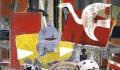 ©Georges Braque, Atelier VIII, 1954/55, Colección Masaveu, Oviedo
© VBK Wien, 2007/08
The Bank Austria Kunstforum is presenting a large-scale retrospective on Georges Braque in winter 2008 as an act of homage to this major pathfinder of the avantgarde. It will not only be the first retrospective in Central Europe after a period of twenty years, but the very first presentation of Georges Braque in Austria – 45 years after his death.
FOTOGRAFIS
collection reloaded
11 September – 29 October 2008
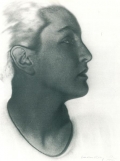 ©Man Ray, Portrait of Meret Oppenheim, 1933
© VBK Wien, 2007/08
In autumn 2008, the Bank Austria Kunstforum will be presenting 270 highlights from the FOTOGRAFIS collection. After two decades – the last »FOTOGRAFIS exhibition« was in 1986 – international photography is returning to the exhibition rooms on Freyung. In the FOTOGRAFIS collection, started in 1976, the Bank Austria owns one of the earliest and most outstanding collections of photography in Europe. The exhibition FOTOGRAFIS collection reloaded aims to update positions in the history of photography: stylistic strategies of pictorialism and Neue Sachlichkeit (New Objectivity) of yore will be placed side by side with recent works, which will augment the exhibition as loans. Alfred Stieglitz for instance enters into dialogue with Andreas Gursky, Albert Renger-Patzsch with Candida Höfer and James Welling.
MONET - KANDINSKY - ROTHKO AND THEIR INHERITANCE
Paths of abstract painting
28 February - 29 June 2008
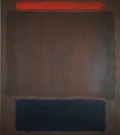
The exhibition puts the focus on a central theme of modern painting: abstraction. The timeline ranges from the pioneers of the modern movement including Claude Monet, Vassiliy Kandinsky, Kasimir Malevich, the exponents of Abstract Expressionism like Mark Rothko and Willem de Kooning, and contemporary formations including such artists as Gerhard Richter, Brice Marden and Sean Scully. Various thematic skeins are woven into the structure of the exhibition concept, uniting criteria contingent to the history of development, style, technique and aesthetics. It will provide a view of elective affinities, traditions, analogies and differences between various artistic works of different generations and hence underline the elemental status and topicality of abstraction for painting.
THE KISS OF THE SPHINX
SYMBOLISM IN BELGIUM
An exhibition in cooperation with the Musées royaux des Beaux-Arts de Belgique, Brussels
October 16th 2007 - February 2nd 2008
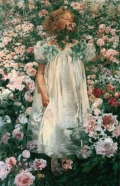 ©Léon Frédéric, Fragrance, 1894
© VBK Wien, 2007/08
“The essential attribute of symbolist art consists in never fixing or directly uttering an idea as a concept”, wrote the poet Jean Moréas in 1886 in his Manifeste du Symbolisme. The cradle of literary symbolism was in France and Belgium, and it was here, too, that symbolist painting was born. Its exponents were linked not only by the artistic manner of expression, but first and foremost by an intellectual attitude, in which the power of the imagination plays a key role. Symbolism is informed by the constant confrontation with the boundaries between reality, dream and doubt; with endurance and decay, with redemption and downfall. A close interconnection of poetry and the visual arts, the tendency towards the Gesamtkunstwerk – the total work of art – also characterise symbolism, which embraces painting, jewellery, works on paper, the decorative arts and furniture. Costly materials in the most consummate and elaborate workmanship, an elegant, linear language of forms and a melancholy and dreamy overall mood mark this art trend, which has such a close affinity to art nouveau.
»wann immer vorerst – gather the day«
Update on the collection of the Bank Austria Creditanstalt
September 4th - October 7th 2007
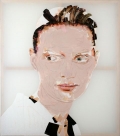 ©Gabi Trinkaus, SI, 2006
© Sammlung BA-CA
The next exhibition in the BA-CA Kunstforum is opening its doors with the title »wann immer vorerst – gather the day« on Tuesday 4 September, presenting works from the art collection of the Bank Austria Creditanstalt (BA-CA) – one of the foremost private collections of Austrian art since 1945.
The BA-CA collection is the result of an intensive collecting tradition lasting 60 years. Key focuses of the BA-CA collection are on painting, photography and actionism. The BA-CA also has a special interest since 2003 in the multifaceted and extraordinarily exciting art market in Central and Eastern Europe.
EROS IN MODERN ART
March 1st 2007 - July 22nd 2007
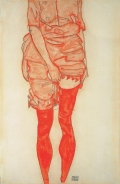 ©Egon Schiele, Stehende Frau in Rot, 1913, Privatsammlung
© VBK, Wien, 2006/07
In the spring of 2007, the BA-CA Kunstforum will be holding an extraordinary exhibition on one of the most seminal themes of the modern movement in art: eroticism.
MARC CHAGALL – MASTERWORKS 1908-1922
November 15th 2006 - February 18th 2007
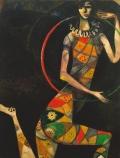 ©Der Akrobat, 1914
© VBK, Wien, 2006
In Fall 2006, the BA-CA Kunstforum presents an exhibition focusing on the "Russian" years of Marc Chagall; – the period until 1922, when he finally left his home as an artist and headed for the West. With this exhibition, the BA-CA Kunstforum continues a series of great exhibitions, which have been dedicated to the key works of art of famous Russian artists of the 20th century: the first comprehensive retrospective on Kasimir Malewitsch, 2001 and the Wassily Kandinsky exhibition: "The sound of color", 2004, which dealt with the most crucial years of Kandinsky's way to Abstraction and thus his influence on the avant-gardes of the 20th century.
MARKUS LÜPERTZ
September 6th 2006 - November 5th 2006
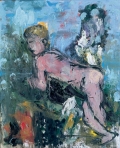
Markus Lüpertz is one of the figureheads of an art that despite all vaguaries of dogma and fashion always adheres to the "traditional" panel painting, which has so often been declared dead. His pictures are always witness to an enormous vitality and power – in the charged field between monumental earthing and fine ornamentation, in connection with the timeless beauty of classical painting.
CRAZY LOVE: DALI – BACON
March 8th 2006 - June 18th 2006
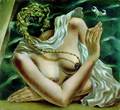
From March to June 2006, the BA-CA Kunstforum will show the Collection Ulla and Heiner Pietzsch. This is a continuation of the successful presentations of private collections, so far undiscovered and completely withheld from the public, as the Kunstforum has made it in the 1990ies at regular intervals: starting with the Swiss Weinberg Foundation and Collection (»Degas – Cézanne – Picasso«) in 1996, over the collection of Bernard Picasso, Pablo Picasso's grandson (»Picasso. Figure and Portrait«) in 2000, to the last exhibition of this kind of the »Sammlung Im Obersteg« in Fall 2003.
Superstars: From Warhol to Madonna
November 4th 2005 - February 22nd 2006
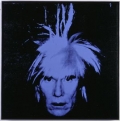 ©Andy Warhol, Self-Portrait (blue)
© VBK, Wien, 2005
Departing from the figure of Andy Warhol, the Superstars exhibition sets out to explore both the phenomenon of artists as stars (Pablo Picasso, Salvador Dalí, Marcel Duchamp, Joseph Beuys, Markus Lüpertz, etc.), as well as the way in which images of media celebrities can serve as visual raw material.
Christian Ludwig Attersee
September 2nd 2005 - October 26th 2005
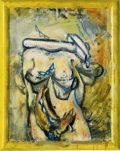
Individual works on canvas and picture cycles in which the artist has developed a new expressiveness in paint and figuration.
Rene Magritte
6. April 2005 - 24. July 2005
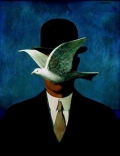 ©L’Homme au chapeau melon
© VBK, Wien, 2005
This exhibition, the first Magritte retrospective in Austria, gives an overview of the entire oeuvre of the great Belgian surrealist.
Willem de Kooning
13. January 2005 - 28. March 2005
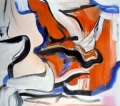
Willem de Kooning's multifaceted painting shifts constantly between the poles of figuration – as in the well-known Women pictures – and the abstract gesture, which is strongly linked to action painters like Jackson Pollock and Franz Kline.
Tamara De Lempicka: Femme Fatale of Art Deco
16. September 2004 - 2. January 2005
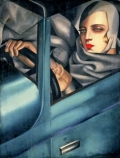
From 15 September 2004 BA-CA Kunstforum is to mount the first complete exhibition of work by the Polish painter Tamara de Lempicka. She is best known for her pictures epitomising the flair and lifestyle of Art Deco: her Self-portrait in a green Bugatti stands as a symbol for the period, but Lempicka’s exceptional artistic qualities have remained largely unappreciated.
Vassily Kandinsky
18. March 2004 - 18. July 2004
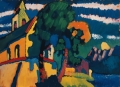 ©Riegsee-Dorfkirche
© VBK, Wien, 2004
The exhibition begins with Kandinsky’s relatively traditional work as a painter during his early years in Munich and leads on to his encounter with Expressionism while traveling in Italy and Paris.
Roy Lichtenstein
11. December 2003 - 7. March 2004
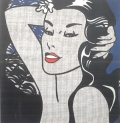 ©Kleine Aloha
© VBK, Wien, 2003
From 11 December 2003 to 7 March 2004, more than 45 paintings together with a selection of works on paper will be on show, giving an insight into Lichtenstein’s diverse artistic output. This unique project featuring pieces many of which have never been seen in Europe is the results of a partnership with the Roy Lichtenstein Foundation, numerous international museums (including the Solomon R. Guggenheim Museum, New York, the Sonnabend Collection, MUMOK) and many private collections.
Under the Modernist Spell Picasso, Chagall, Jawlensky
4. September 2003 - 30. November 2003
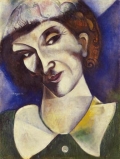 ©Self Portrait
© VBK, Wien, 2003
In autumn 2003 the Bank Austria Kunstforum will show one of the last private Swiss collections not previously seen by the public, the one of the “ Im Obersteg” family.
Futurism - Radical Avantgarde
7. March 2003 - 29. June 2003
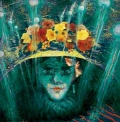
The Italian Futurists associated with Fillipo Tommaso Marinetti projected themselves as uncompromising and spectacular. Not only did they revolutionise the visual concept of Modernism but they also campaigned for an extended idea of what makes art.
Impressionism: America France Russia
25.October 2002 - 23.February 2003
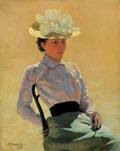 ©Portrait of an unknown woman
© BA-CA Kunstforum
Both countries witnessed their own independent examinations of Impressionism in impressive quality. Russia and America feature in the show as an Impressionist panorama which captures the essence of these two contrasting landscapes and their people.
Menü
Aiwasowski - Maler des Meeres 17.03.2011 – 10.07.2011
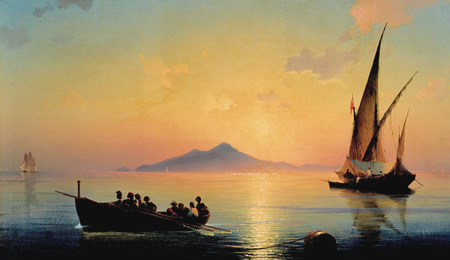
Ivan Konstantinovitch Aivazovsky, Golf of neapel,1841
© The Peterhof State Museum-Reserve, St. Petersburg, 2010 (detail)